In Commercial Remodels, Downtime Is the Most Expensive Line Item
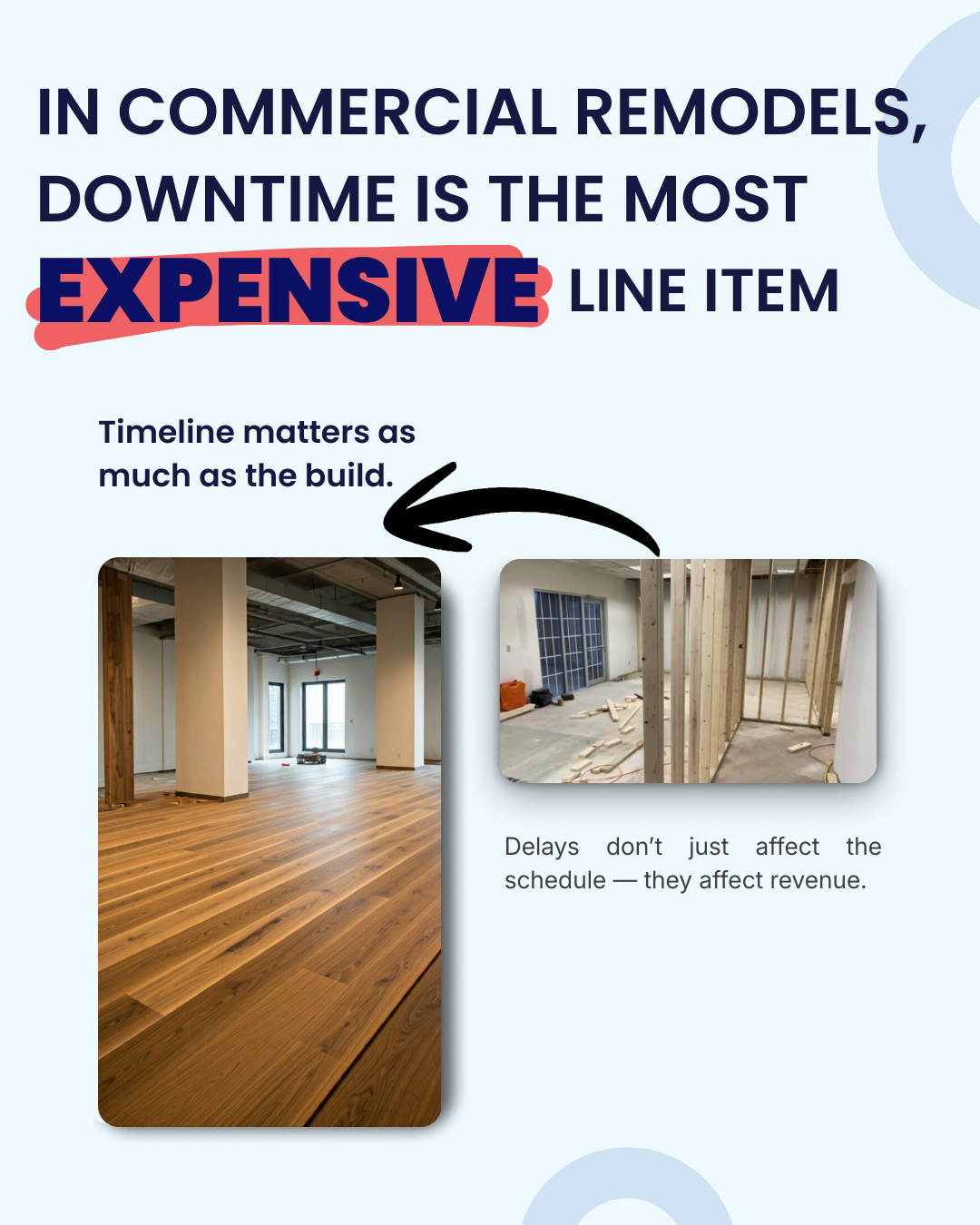
When planning a commercial remodel, most people focus on construction costs — materials, labor, and finishes. But in reality, the most expensive cost often isn’t on the proposal at all.
It’s downtime.
In commercial projects, every extra day a space is unusable directly impacts revenue, operations, tenants, and long-term performance. That’s why timeline matters just as much as the build itself.
Downtime Isn’t Just a Schedule Problem — It’s a Revenue Problem
For commercial spaces, delays can mean:
- Lost sales
- Missed lease start dates
- Extended rent concessions
- Staff sitting idle
- Investors waiting longer for returns
A project that runs weeks or months behind schedule can easily cost more in lost revenue than the original construction budget.
Why Commercial Remodels Often Get Delayed
Delays usually don’t come from one big mistake — they come from a series of small oversights:
Incomplete Scope
When scope isn’t fully defined, projects stall mid-build due to change orders, missing trades, or overlooked work.
Poor Trade Coordination
Commercial remodels require tight coordination between framing, electrical, plumbing, HVAC, inspections, and finishes. One delay can cascade into many.
Material & Equipment Lead Times
Ordering late or choosing materials without verified lead times can halt progress unexpectedly.
Permits & Inspections
Missing permits or poor inspection scheduling can shut down work entirely until issues are resolved.
Why the Cheapest Bid Often Costs the Most
Low bids often look attractive — but they frequently rely on:
- Optimistic timelines
- Minimal staffing
- Poor sequencing
- Little contingency planning
When something goes wrong, the schedule slips. And in commercial construction, time is money.
A slightly higher bid with a realistic schedule, proper staffing, and clear sequencing often delivers far better value than a “cheap” quote that drags on.
Timeline Planning Is a Construction Skill
A well-run commercial remodel doesn’t just happen — it’s planned.
This includes:
- Phased construction strategies
- After-hours or off-hour work (when needed)
- Sequencing trades to avoid downtime
- Coordinating inspections in advance
- Keeping materials on-site before they’re needed
Good contractors build with the end date in mind from day one.
Building for Speed Without Cutting Corners
Finishing faster doesn’t mean rushing — it means working smarter.
The goal is to:
- Maintain quality
- Meet code requirements
- Protect long-term performance
- While minimizing operational disruption
When construction is planned correctly, speed and quality can coexist.
Final Thoughts
In commercial remodels, the true cost of a project isn’t just what you pay the contractor — it’s how long the space stays offline.
A well-managed timeline protects:
- Revenue
- Tenants
- Customers
- Long-term asset value
That’s why timeline matters just as much as the build.
Guided by Integrity. Built for the Future.
01
✅ Decades of Proven Experience
02
✅ Superior-Grade Materials
03
✅ Full-Service Construction Capabilities
04
✅ Innovative Building Practices
05
✅ Sustainable Development Focus
06
✅ Trusted Industry Relationships
07
✅ Scalable Solutions for All Project Sizes
.png)





.svg.webp)