What a “Cheap” Quote Usually Doesn’t Include
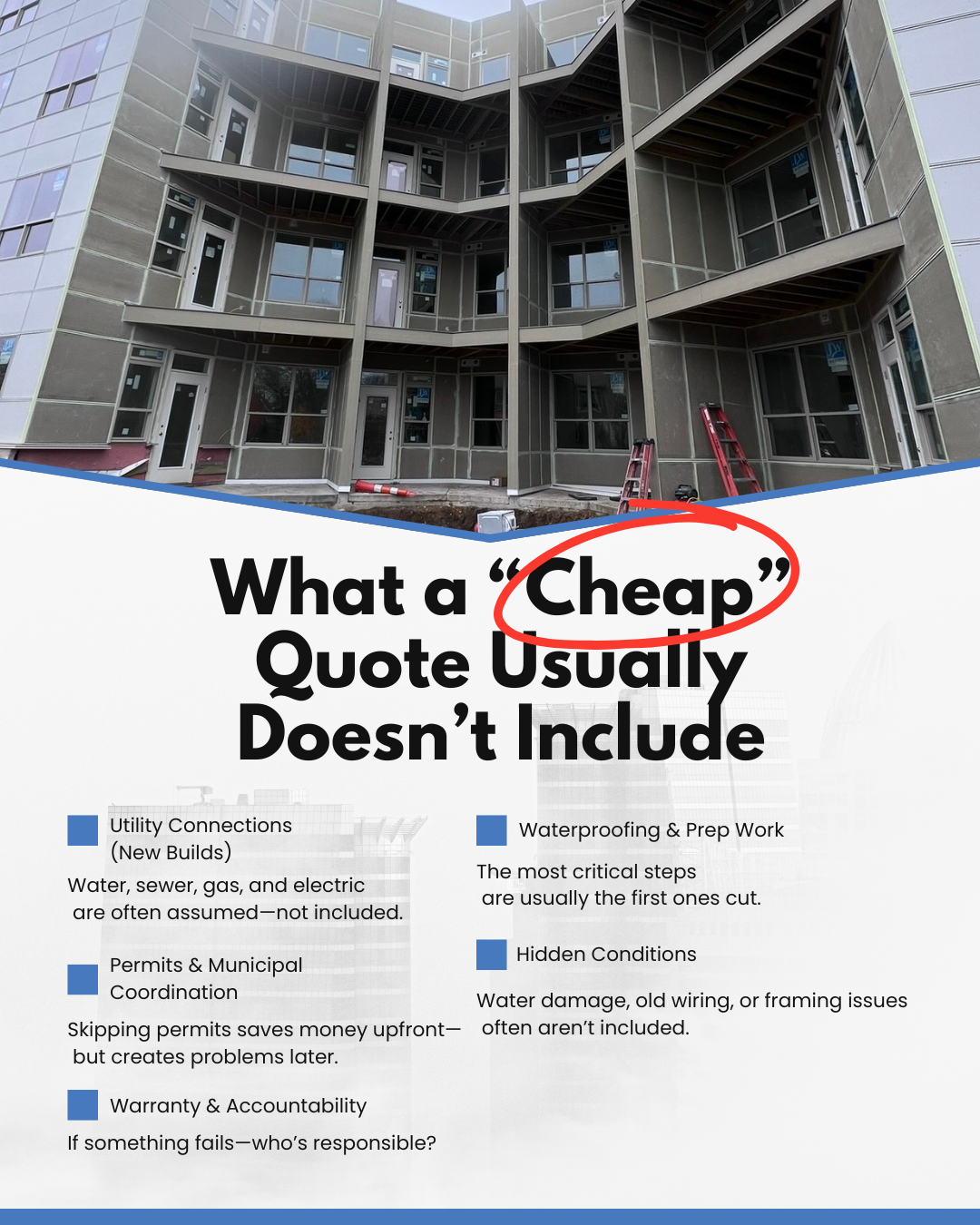
When reviewing construction quotes, it’s tempting to focus on the lowest number. On paper, a cheaper quote can look like a win — but in reality, it often leaves out some of the most critical (and expensive) parts of a project.
In construction, cheap upfront frequently means costly later.
Below are some of the most common items that are often missing from “cheap” quotes — and why they matter.
Utility Connections (Especially in New Builds)
In many new construction projects, utility connections are assumed, not included.
This can involve:
- Water service connections
- Sewer taps or septic systems
- Gas line connections
- Electrical service and meters
These are not minor line items. Utility work often requires:
- Excavation
- Municipal coordination
- Inspections and approvals
- Specialized labor
When utilities aren’t clearly included in a quote, homeowners and investors are often surprised by tens of thousands of dollars in additional costs once construction is already underway.
Permits & Municipal Coordination
Skipping permits can make a quote look cheaper — but it creates serious risk.
Proper permitting involves:
- Submitting plans
- Coordinating with local building departments
- Scheduling inspections
- Addressing code requirements
When this step is skipped or rushed:
- Projects get delayed
- Work can fail inspection
- Owners may be forced to redo completed work
What saves money upfront often turns into major delays and fines later.
Waterproofing & Prep Work
Prep work isn’t glamorous — but it’s critical.
This includes:
- Waterproofing systems
- Proper flashing and sealing
- Substrate preparation
- Drainage planning
These are often the first items cut to make a quote look more competitive. Unfortunately, they’re also the items that protect the structure long-term. When prep work is skipped, problems like leaks, mold, and premature failures show up months or years later.
Hidden Conditions
Older buildings and renovation projects almost always involve unknowns.
Common hidden conditions include:
- Water damage
- Outdated or unsafe wiring
- Structural framing issues
- Plumbing that doesn’t meet current code
Low bids often exclude allowances for these realities. When issues are discovered mid-project, owners are forced into change orders with no leverage, driving the final cost far beyond the original “cheap” number.
Warranty & Accountability
One of the most overlooked questions is also the most important:
If something fails — who’s responsible?
A cheap quote may come from:
- Uninsured contractors
- Temporary crews
- No written warranty
- No long-term accountability
When problems arise, the contractor may be gone — leaving the owner to pay for repairs twice.
The Real Cost of a “Cheap” Quote
A well-prepared quote doesn’t just list materials and labor — it accounts for:
- Scope clarity
- Risk management
- Code compliance
- Long-term performance
The goal isn’t to be the cheapest option.
The goal is to deliver a project that’s built correctly, transparently, and without surprises.
Final Thoughts
If a quote looks significantly lower than the rest, it’s worth asking:
- What’s not included?
- What’s being assumed?
- What happens if something goes wrong?
In construction, the best value is rarely the lowest number — it’s the quote that tells the whole story from the beginning.
Guided by Integrity. Built for the Future.
01
✅ Decades of Proven Experience
02
✅ Superior-Grade Materials
03
✅ Full-Service Construction Capabilities
04
✅ Innovative Building Practices
05
✅ Sustainable Development Focus
06
✅ Trusted Industry Relationships
07
✅ Scalable Solutions for All Project Sizes
.png)





.svg.webp)